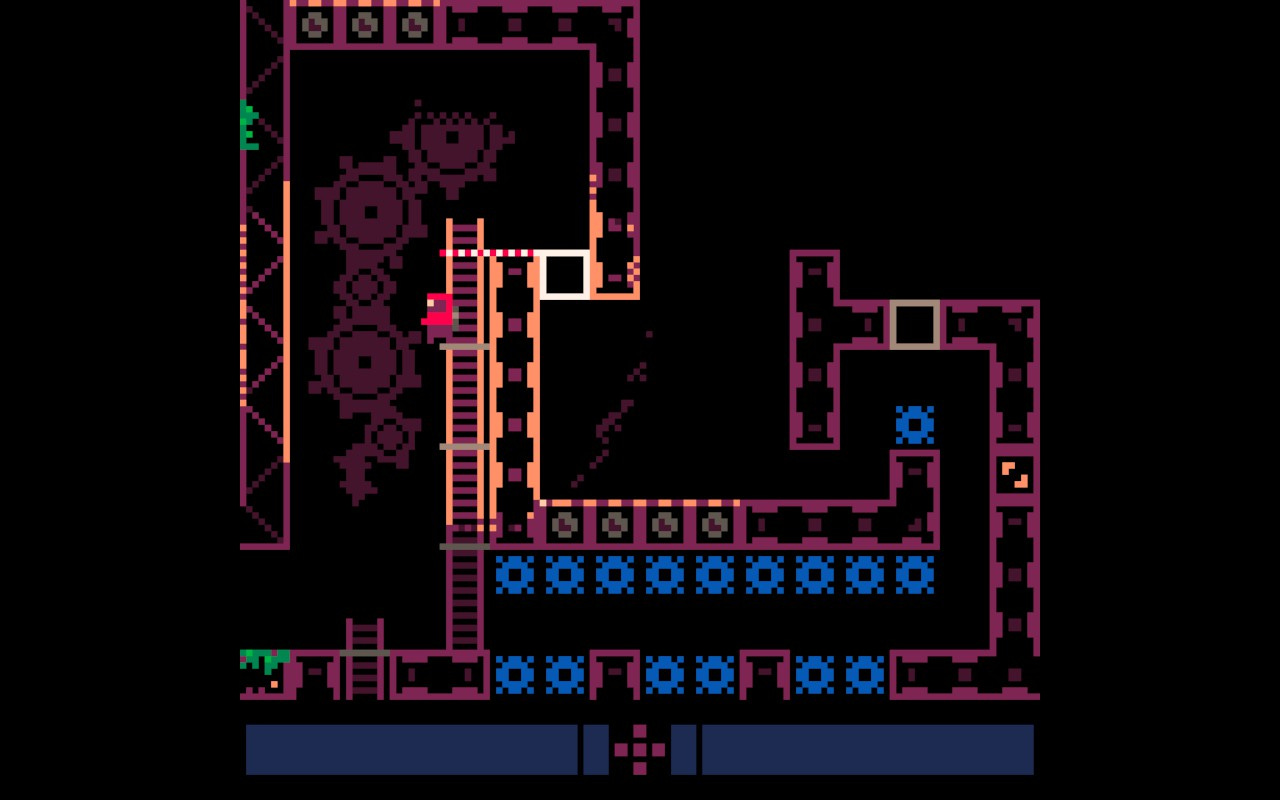
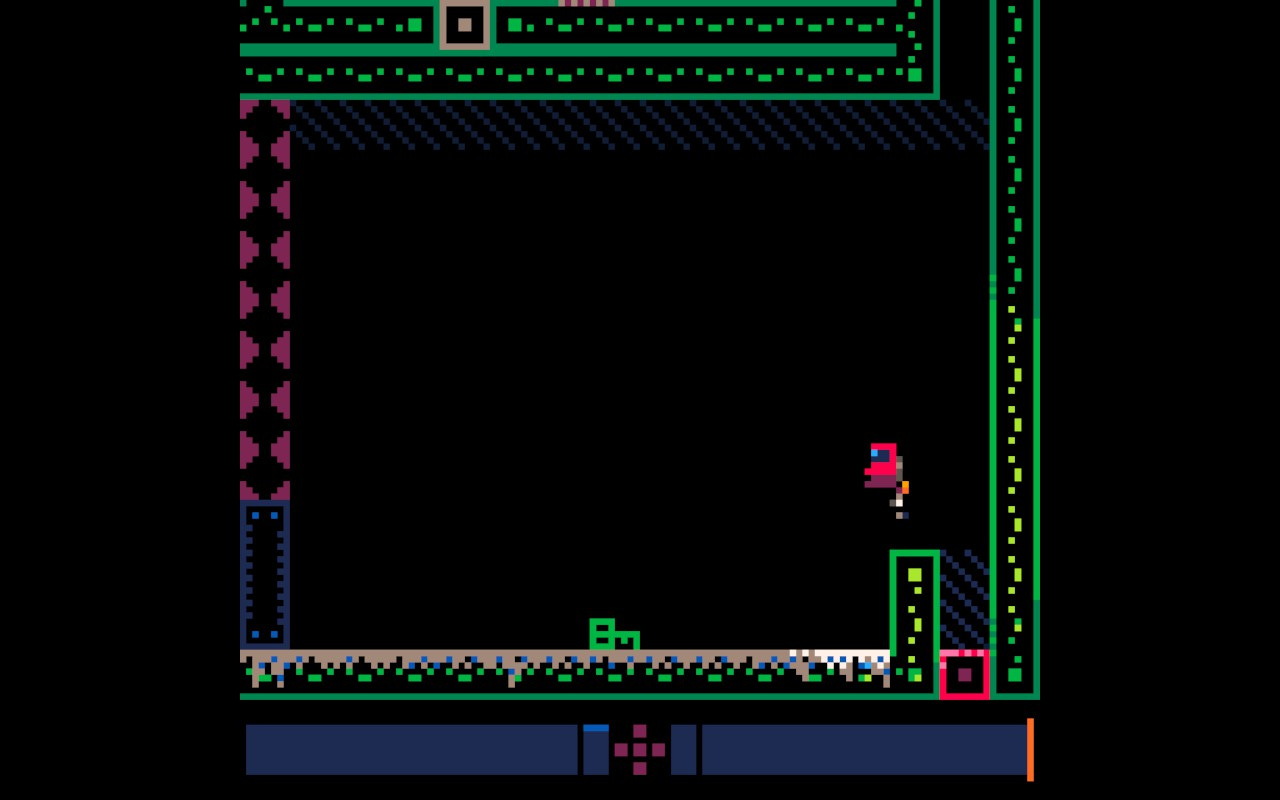
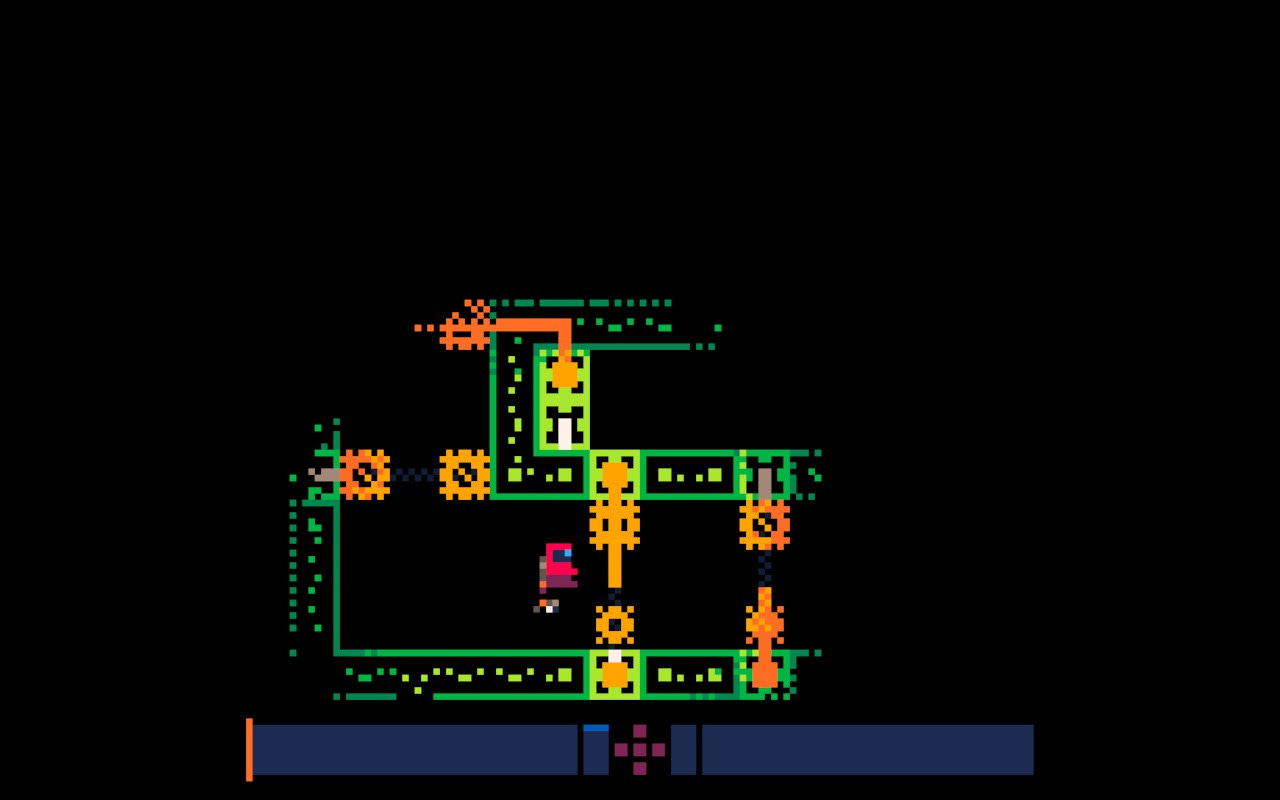
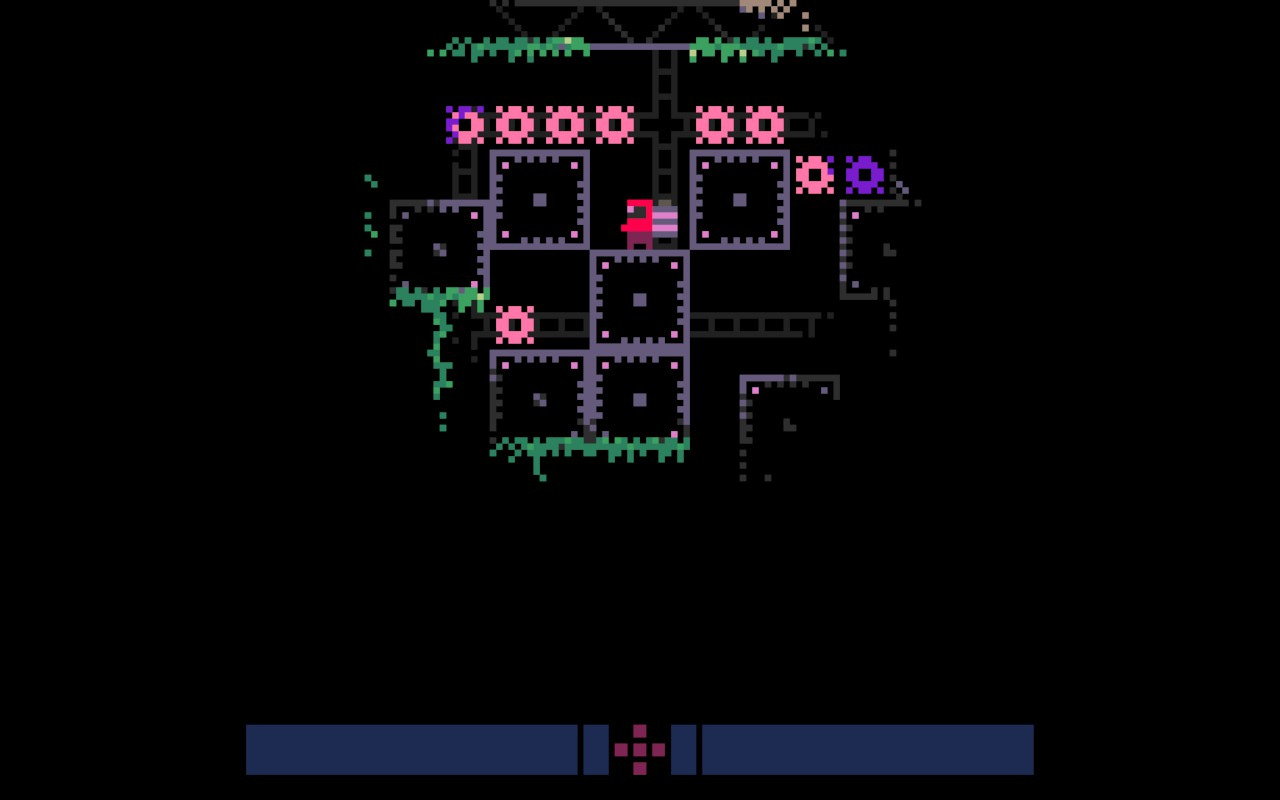
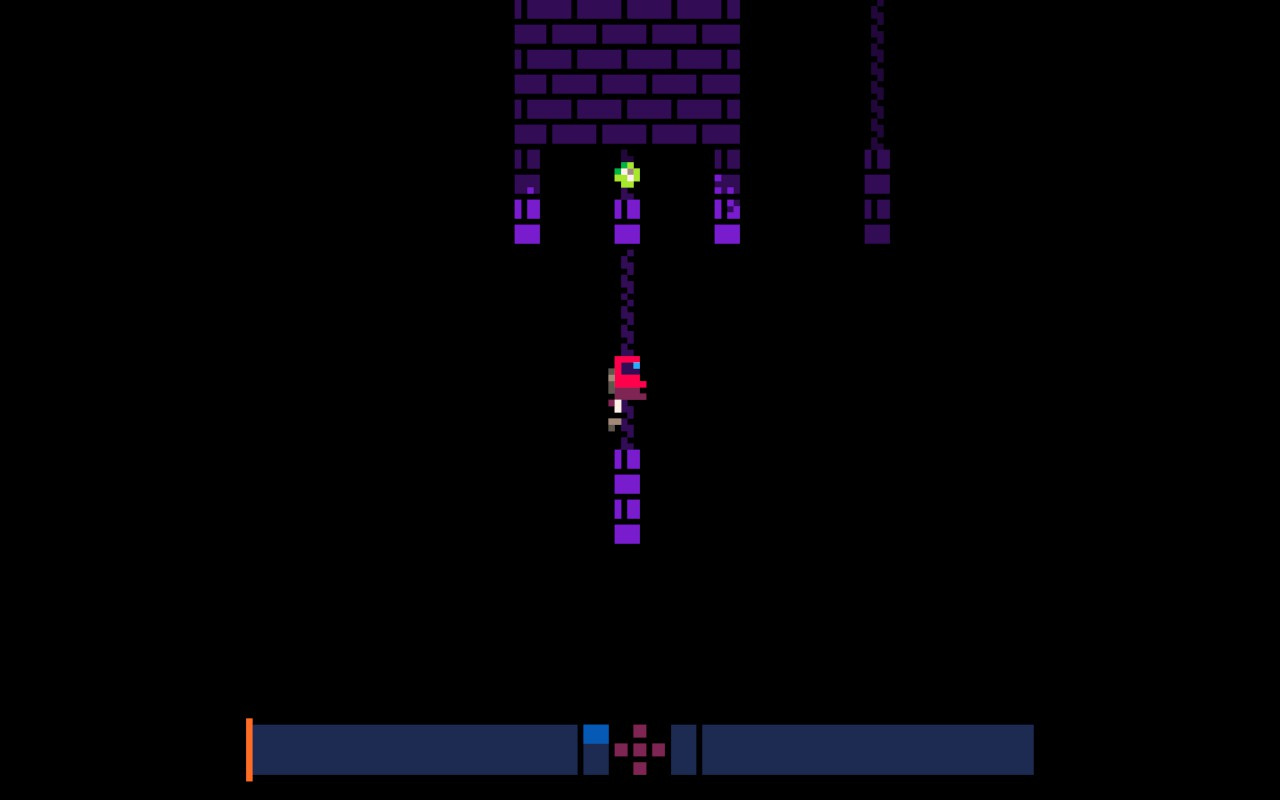
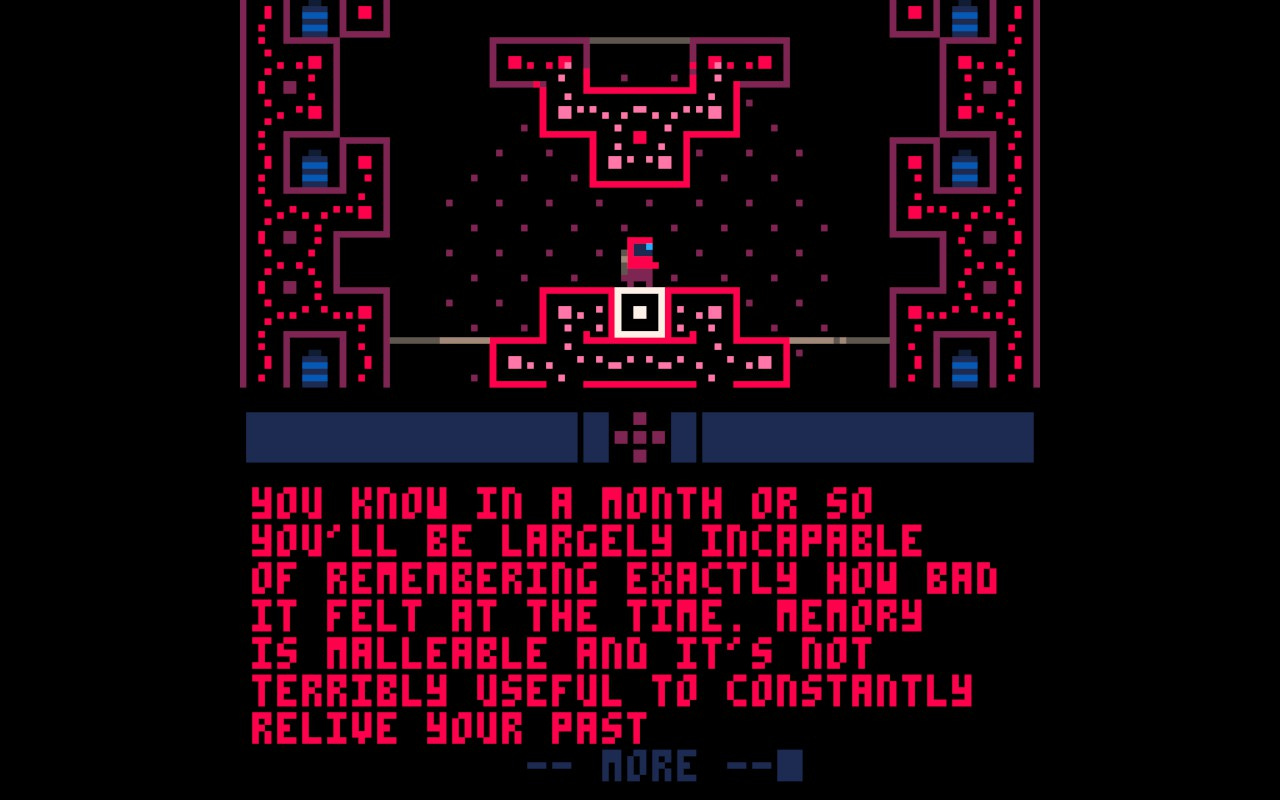
Derelict Star is an indie game that challenges the very notion of difficulty in video games, while offering its own (delightful) take on the "knowledge-vania" subgenre.
Derelict Star is a puzzle-platformer available on Steam and itch.io since the beginning of April.
I fell in love with Derelict Star, a game I discovered completely by chance on the social network Bluesky.
Sometimes, you feel the urge to learn more about a video game you’ve spent a long time with, one that challenged you and pushed you to the brink of insanity! Derelict Star is such a game, in a genre I love (metroidvania) and a subgenre I love even more (“knowledge-vania”).
So I reached out to its solo developer with a bunch of questions!
This newsletter is the very first I’ve ever published in English, as I always write my weekly articles in French. It’s a testament to how much I love this game. So after writing and sending a lengthy newsletter dedicated to Derelict Star, I decided to publish the complete, unedited interview, along with my original questions.
I hope you’ll enjoy it and that it will help bring recognition (even just a little bit!) to a truly excellent game and a great game designer. I cannot thank gate (aka John Williams) enough for the thoroughness and generosity of his answers.
How would you define Derelict Star and would you agree with people (myself included) describing it as a “knowledge-vania”? A subgenre where I would also place games like ElecHead or FEZ, two titles I really love and that may have influenced your game a little bit?
Derelict Star somewhat defies categorization on purpose. I tend to like games that explore or combine ideas in new ways, so I pretty intentionally make choices that buck trends. That said, I do agree that it has a lot of “knowledge-vania” flavor. Before this game I made a few free puzzle games that also attempted to teach the player lessons through gameplay, so it’s a mode of game design communication that I’ve already practiced and become familiar with.
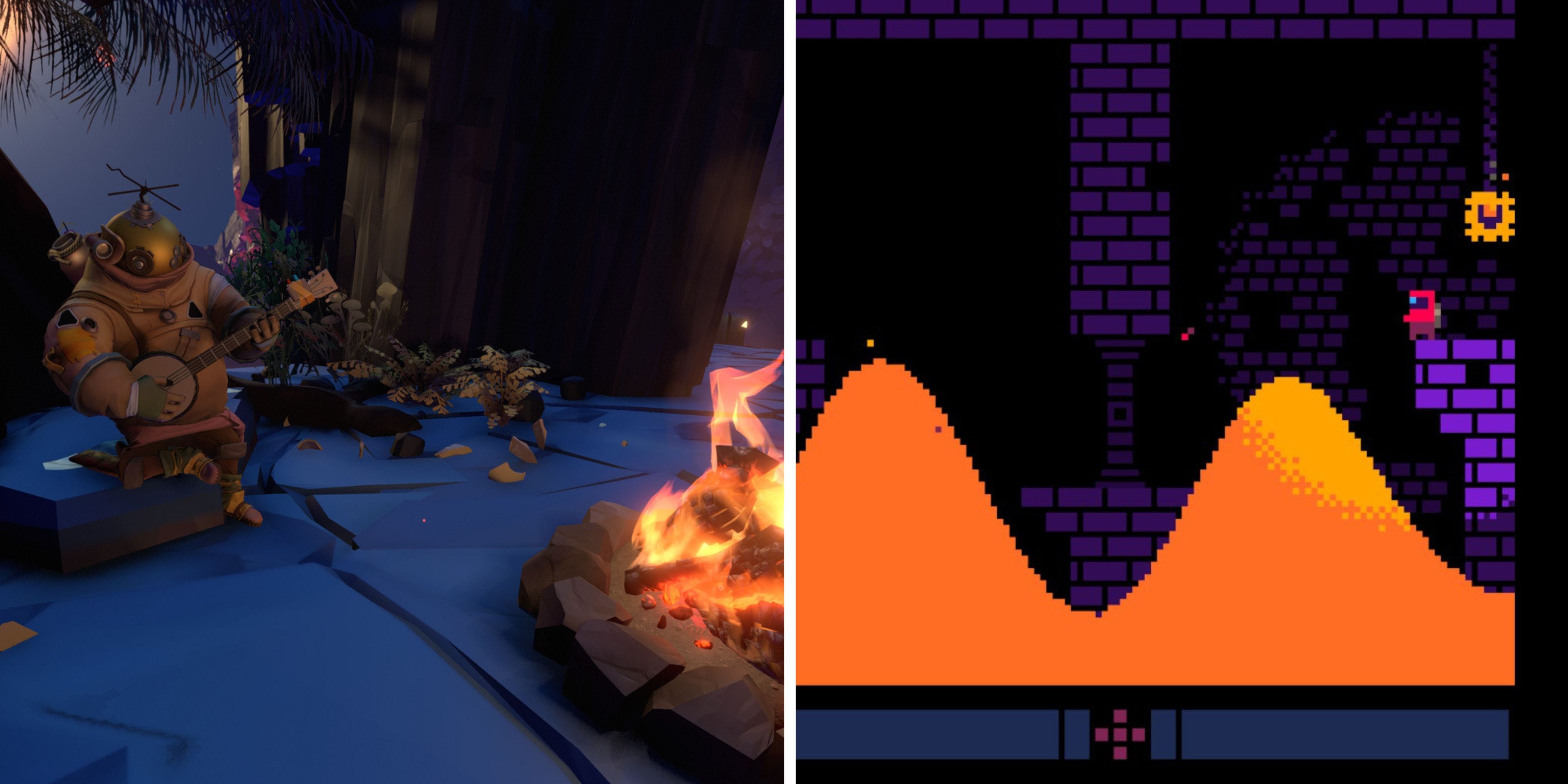
For the two games you mentioned -- I am a fan of both but they’re not my main inspirations. I do really love Outer Wilds so that game is likely a more significant source of inspiration. For FEZ I only played the surface game and not the post-game so I’m not sure how that compares or contrasts to mine. For ElecHead, I appreciate the design but it’s slightly too buttoned-up for me. I like games to be a little messier than the experience I got from ElecHead. Perhaps it’s because I’m a similar designer, but I was able to guess most of what was going to happen in ElecHead so it was less exciting for me.
Outer Wilds (on the left) is one of the inspirations for Derelict Star (on the right).
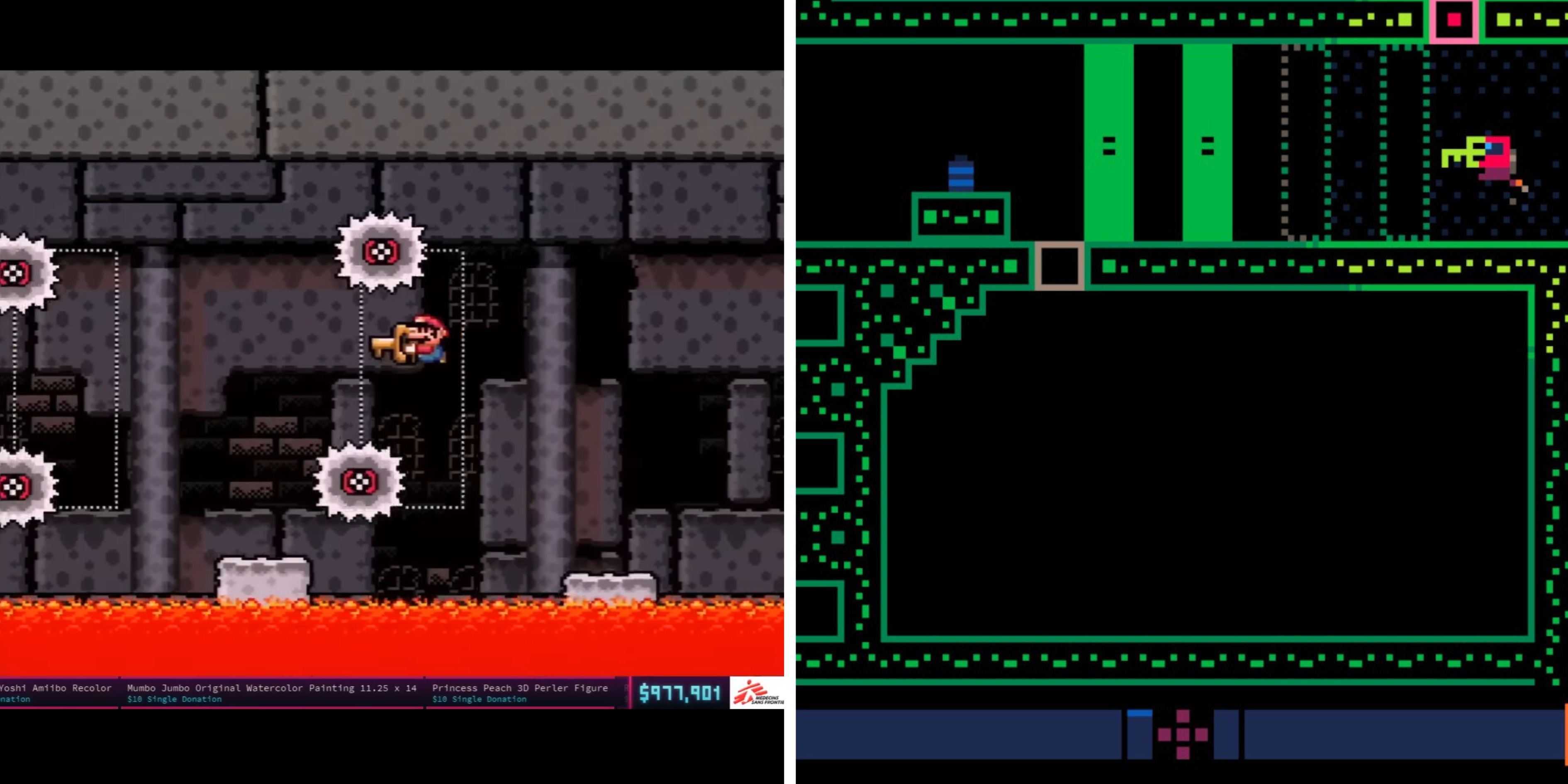
Derelict Star seems to share quite a few common points with Super Mario World ROM hacks, especially the Kaizo Mario genre. There are the keys, the focus on platforming above a sea of death traps, and especially the use of momentum or “P-Speed” in Mario’s language! Are you a Kaizo player? Have you ever tried building levels in Mario Maker or Lunar Magic? What is your relationship with the Kaizo Mario genre?
I did make levels in both Mario Maker 1 & 2. That is actually where I learned I really enjoyed level design. I tried to take under-used elements and mechanics in those games and make weird puzzle levels that would teach them to the player. For example, in Mario Maker 2 I made a whole level based on crouching and rolling in the 3D World tileset. Before Mario Maker I thought of myself as mostly a programmer, but Mario Maker taught me I was a level designer too.
I actually just started playing Super Mario World Kaizo hacks during the pandemic. I had caught COVID and had a hard time doing much outside of sitting, and playing really hard Kaizo levels was pretty good at distracting me from my illness because it took the entirety of my attention to play well. After a frustrating few days, I really started to appreciate the design and creativity on display in the Kaizo community. It felt like a step up from Mario Maker in terms of ideas and player expression.
The key… A simple object in Super Mario World that has been reinvented in ROM hacks such as Grand Poo World 2 (on the left). Derelict Star pays homage to it.
Taming the character’s momentum and understanding how to use it in different environment, each with its own set of special rules, is (for me at least) the key feature of Derelict Star. How hard was it to nail that jump?! And did you continue tweaking it even after starting to build levels? It feels like the jump had to be perfected first, because Level Design is tailored to it… What was the moment during production when you knew you had found the right “feel” for the jump?
For a game to be good, I believe you want to nail the fundamentals of how it plays. So when I started work on the game, I only focused on the fundamental physics. It took about a week of programming and tweaking numbers until I was happy with how the character controlled.
From my experience making puzzle levels in Mario Maker, I knew I wanted a very predictable jump height. When you’re making puzzles, if a jump is technically possible then you have to account for it in the puzzle design. This is part of what makes making puzzle levels in Mario Maker so hard -- it’s never clear to the player if a specific jump is possible or if they just messed up the execution of it.
I wanted my jumps to be “easy” and obvious for on-grid platforming, so I very intentionally picked jump heights that would give the player a few more pixels of room so that their jumps didn’t have to be perfect. There were certain tile height breakpoints I wanted the player to be able to easily achieve based on their speed (completely still, walking, or running). These breakpoints make it a lot easier for a player to reason about any particular jump.
I would say it was at the end of that first week when I felt I had found the right “feel” for the jump. I still made little tweaks throughout the development process (especially when implementing new features, like moving platforms or ceiling slime) but the core feel of the game was nailed down very very early, basically before any levels were made. I made a little playground to test the physics, wrote the physics, and those physics are very very similar to the final product’s physics.
I love platformers, Super Mario World is one of my favorite games of all time and personally I don’t need a story, an open-world, upgrades, powers or anything to enjoy this old genre. BUT, for many players, a “classic” platformer is not enough anymore. I had the opportunity to interview BZZZT’s developer, Karel Matejka, a few years ago and he told me this: “Platformers are still evolving. It is very hard to attract today’s players with retro-vibe experiences. Platformers need something fresh and deeper to be successful among players. That’s why Metroidvanias are still so popular. The majority of Metroidvanias still bring new ways to control the game, and the exploration aspect of this genre is very tempting. On the other hand, I see lower interest in classic arcade platformers these days. Maybe it’s the right time to come up with some new Metroidvania!”
Would you agree with him? And what made you choose an open-world structure? Also, why did you decide to make an exploration / platformer game without any upgrades? It seems like a much more challenging approach to the genre (in terms of level design)!
I’m not terribly interested in what’s popular, potentially to my detriment. Derelict Star is my first commercial game, and I made it because it’s the type of game I would want to play. I thought I might as well try to make exactly what I want, and if that doesn’t work monetarily then at least I tried and will feel satisfied creatively, and I can pivot to something else afterwards.
I chose an open world structure because I want to challenge the player, but I don’t want to overwhelm them. In a linear game, if a player comes across an obstacle they can’t overcome, then they’re forced to quit the game. The open world softens that difficulty, and players can pick and choose what challenges they tackle in what order, and if they’re stuck they can just move on to something else. The open world is a way of providing a dynamic difficulty setting that the player has some active control over.
I made a platformer without any upgrades because I’m very interested in games where your skill as a player improves. I grew up on NES games, arcade games, and traditional roguelikes, so I am in love with the feeling of seeing something that initially feels impossible, and then slowly getting better until suddenly it’s possible. Upgrades just complicate and dilute that feeling. I want the player to feel accomplished, and any upgrades or meta-progression might undermine that.
I personally think that Derelict Star is a VERY difficult game. And you clearly are a very skilled player since you 100% your game in about 6 hours, which is incredible. What was your mindset when designing the levels? How did you approach and balance difficulty?
Balance is mostly all just intuition for me. As previously stated, I love the feeling of mastery in games and I want to communicate that feeling to other players who maybe have not experienced it yet. For example, most Kaizo hacks are aimed at experts, and even the “easy” ones that Kaizo players recommend to beginners have quite difficult sections that can discourage players from continuing.
I wanted to design a game that could ease a beginner player into these challenges without totally overwhelming them. In some ways this is an impossible task, because every player is different. So during testing I added the “assist” and “help/hint” menus to try to bridge the gap when my design fails in some way for the player.
In terms of challenges -- sometimes I approach level design “backwards”. I make the hardest puzzle/section I can with the tools I have, which might be the final challenge in an area. I then work backwards from that, and figure out ways to introduce the ideas and skills necessary for that final challenge. How can I isolate individual parts for the player to learn separately? What aspects of the challenge can I tweak to make it more forgiving?
The large majority of playtesting was online with a handful of people. The most useful playtesting was from testers who would record their playthrough with commentary, and I would watch it back and take notes on what they liked, what they struggled with, and anything that didn’t work the way I wanted it to.
I did have a few friends playtest some specific areas in person and those sessions were helpful too. Notably, I had my sister -- whose video game experience is mostly just Animal Crossing -- test the “Slimb Climb” area and she was actually able to complete it within an hour with no prompting from me. This was a very encouraging result, because it did mean it was possible for relative beginners to learn if they had enough patience and determination.
How did you decide that collecting 9 cells would be a good number to “finish” the game and give players a sense of closure?
This was also mostly intuition/vibes. I made the decision after designing all 13 batteries, and I tried to pick a threshold where a slightly above average player would still feel challenged. I want to respect my players and instill a sense of accomplishment -- if too much of the game is optional they’ll suspect they’re missing some part of the experience -- but ultimately I want them to play exactly as much as they want to. There’s no “perfect” place to put it because it varies greatly from player to player, so I just picked one.
I personally feel that the game’s difficulty can sometimes be quite harsh and may occasionally get in the way of the player’s sense of accomplishment. (…)
Why did you decide to add this “extra” difficult segment at the end of an already difficult section tied to a puzzle [Editor’s note:I cut the example from the question to avoid spoilers]? More broadly, when and how do you decide that a section is “difficult enough”? How do you balance the player’s sense of accomplishment with pacing the difficulty? If that makes sense…
I think I tend to value negative emotions and antagonism more than the average developer. To me, interacting with an antagonistic game tells me so much more about the developer than a strictly pleasant one does. A player interacting with a system that is playful and tricks them feels like a direct dialogue between the player and developer, more so than normal design allows. I really value that communication and want that human element to shine through in my design. The player starts to be able to imagine the personality of the person that made the game.
I also don’t like when video games feel rote and predictable, and games start to feel that way when the designer starts following a bunch of invisible rules for what makes a game “good” and “fair”. Video games are sort of inherently unfair -- the code always hides more rules than the game explicitly communicates to you. I’ve heard Dark Souls described as “tough but fair” but that game actively tricks you and often kills you in surprising ways that you could not foresee.
When designing games you make 1000s and 1000s of decisions, and the only way I know how to make that many decisions is with intuition. I do what feels right to me at the moment. Sometimes I’m wrong, and I learn that when people test the game. But I’d never want to completely flatten that variance out of my game. The outside world is messy, and my game design is messy in a way that hopefully reflects the world around me.
Difficulty is just one of the tools I use to surprise the player and I’d never want my design to be so predictable that I ruin that surprise. I don’t use it everywhere because for it to work you want the player to trust you, and deploying it too much ruins the surprise anyway.
Why did you choose to use the terminal to share messages about mental health (I really loved those by the way)?
I’ve struggled with anxiety my entire life, and even though I’m always learning more techniques and ways to deal with it, I suspect I’ll never feel completely free of it. I hadn’t seen my particular brand of “sarcastic self-awareness” depicted before, but that was a mode my younger self operated in a lot of the time. My anxiety made me hyper-aware of myself, which meant I was often very aware of most of the negative effects that anxiety had on my life, but that awareness gave me no ability to fix any of my problems.
It took me a while to learn that that’s a very toxic mindset to be in, and it’s self-reinforcing. Being critical of myself just made my problems worse, and the only way out of that spiral was to be more kind and accepting of myself.
For me that mindset is something I can fall into easily when making things, including this game. So in some ways it’s a reflection of my worst thoughts I could have had while making it, and I thought it also might mirror a particular type of player who’s hard on themselves when they can’t beat a platforming puzzle. So I liked that duality of it, both reflecting a version of me as the developer, and a version of me as a player. I’m telling myself and the other people playing that “it’s okay to fail” and to accept themselves where they are, rather than where they’d like to be.
And finally, could you tell us a bit about yourself? Are you a full-time developer? Where are you from? What pronouns do you prefer?
Sure. My name is John. I use he/him pronouns. I grew up in the rural midwest in the United States and I still live there today. I worked in a corporate environment for about 12 years as a programmer making iPad apps and websites. Eventually the corporate life really wore me down (boredom + stress is a TERRIBLE combination for someone who deals with anxiety) so I quit and gave myself some space to feel out what I really wanted to do. I live very frugally and the cost of living is pretty low in the rural midwest so I had saved up enough money that I had enough of a cushion to do what I wanted for a few years. I learned Godot about 2 years ago, and Derelict Start took about 1 year to develop full-time. I did literally everything for the game -- the graphics, sounds, programming, design, etc, so it took a while for me to get comfortable in some of the skills I felt I was worse at.
Thank you so much for reading this interview and a thousand thanks to Derelict Star’s developer, John Williams, who took the time to answer my questions with such detail and honesty.
PS: Derelict Star’s screenshots were captured on Steam Deck from a commercial version of the game.